Clarinetist, historian and popularizer of New Orleans jazz

By Bego Grau
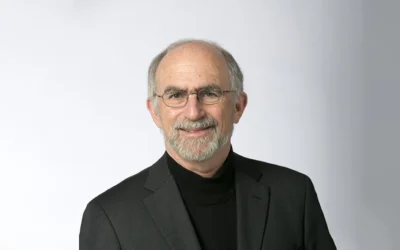
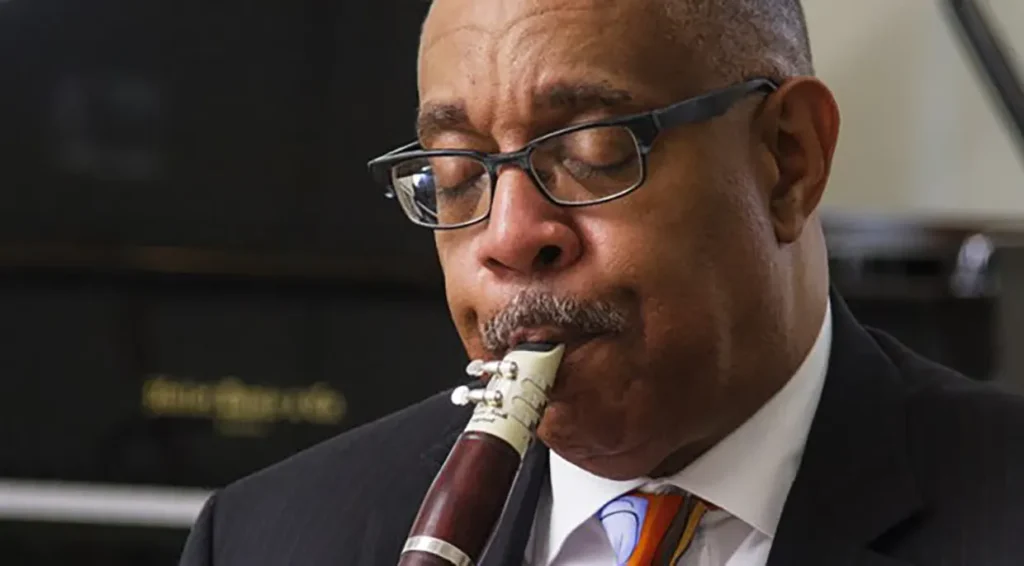
Michael White is one of the most respected voices in traditional New Orleans jazz. Born and raised in this unique environment, the clarinetist has been working for more than fifty years to preserve and keep alive this musical language, born in the streets, in parades and funerals, and closely linked to the life of the community. Trained in this context since the mid-seventies, White has not only interpreted this legacy: he has learned it directly from the last musicians of the first generation of jazz, who had shared the stage with figures such as Louis Armstrong, King Oliver or Sidney Bechet.
With a style of his own, but deeply rooted in the Afro-Creole tradition, White combines respect for the classical repertoire with compositions and reinterpretations that show that this language is still alive. Throughout his career, he has taken this way of understanding jazz to stages around the world, from Carnegie Hall to Lincoln Center. At the same time, he has developed a long career as a teacher, historian and popularizer of jazz, a job he maintained until his retirement in 2023.
We talk on the occasion of the concert he will do on April 9, 2026 in Barcelona, as part of the Barcelona Springtime Swing ‘26 series, at the Ateneu Barcelonès (7:30 p.m.). He will perform with the Sunset Rhythm Kings ensemble, made up of Dani Alonso (trombone), Oriol Vallès (trumpet), Marc Martin (piano), Albert Martínez (double bass) and Joan Casares (drums). Tickets are on sale now.
We say that New Orleans is the birthplace of jazz. Why?
Because of its history and culture. New Orleans is a city very different from the rest of the United States, with French and Spanish influences, and with a very intense relationship with music since its beginnings. It was a place where living was difficult, especially because of the climate, and that made the inhabitants always want to celebrate life. This translated into great meals, dances, parades… and music. Music everywhere: in the streets, in churches and even at funerals.
What role does African influence play in the birth of jazz?
It is fundamental. In New Orleans there was a significant presence of Afro-descendant population, both slave and free, and that made it very different from other places in the United States. Slaves gathered on Sundays to play and dance to African music. Sometimes hundreds of people participated, organized according to their origin, and played and danced to rhythms typical of each town. This tradition left a very deep mark on the music of the city. You can see it in the parades, in the way they play, in the rhythm… And not only in jazz, but also in other genres such as gospel or rhythm and blues. Jazz is born precisely from this mixture: African, European, religious music and popular music, all combined in the same space and in the same community.
 Beyond music, what does jazz represent?
It represents many things. On the one hand, it is music to celebrate and to dance to. But it is also a form of expression that was born in a context of great oppression towards the black community. In this sense, jazz becomes a metaphor for freedom and democracy. When you play jazz, you have your own voice, you can express your personality, your way of thinking… And that, in that society, was often not possible. That is why jazz is not only a form of entertainment: it is also a way of making oneself visible and of resisting.
And, specifically, what makes New Orleans jazz different?
It’s community music. Family, neighborhood. It was born in a very specific context, deeply rooted in everyday life. But there’s a paradox: Today, traditional jazz is hardly heard in New Orleans. Many musicians play mostly for tourists, and that makes the music simpler. Tourists want entertainment, and that often leaves out the richer and more complex part of jazz. The melodies of figures such as King Oliver or Jelly Roll Morton are very elaborate, and require large doses of study and practice. And that, little by little, is being lost.
Why?
Because it is a demanding style. It is a rich music, with complex structures, with introductions, interludes, changes… It’s not easy to play. Today many musicians opt for simpler repertoires, which work better in certain contexts. But that makes you lose some of the depth of the music. That’s why, in my case, I try to keep this repertoire alive and also write new music inspired by this tradition.
 What was your first contact with New Orleans jazz?
It was quite late and almost by accident. I came from school bands, had studied clarinet and could read music, but I didn’t know the traditional jazz of New Orleans. The turning point came in 1975, when I started playing with a brass band at parades, funerals, and community events. That’s where I really entered this world.
Who did you reflect with ?
I was lucky enough to play with musicians from the first generation of jazz, born between the end of the nineteenth century and the beginning of the twentieth. Many of them had played with figures such as Louis Armstrong or Sidney Bechet. With them I not only learned to play, but also everything behind it: the history, the context, the way of understanding music. There are many things that are not in the books and that can only be transmitted that way.
You’ve also been a teacher for decades.
Yes, and I have realized that the main problem is that this music is not taught. In schools and universities in the United States, if jazz is taught, it is mostly modern jazz. But traditional New Orleans jazz is practically gone. This means that many musicians do not know or understand him. And it’s a shame, because this music is not just notes: it’s culture. It reflects how we speak, how we walk, how we dance, how we live. If this is not taught, a very important part of New Orleans’ identity is lost.
What role has Wynton Marsalis played in reviving this legacy?
It has been key. He was one of the first modern musicians to claim that traditional New Orleans jazz is an important music and that it should be studied. When Wynton Marsalis started, he didn’t know much about this tradition. It was through contact with musicians from New Orleans (including myself) that he became interested and understood its value. From there, he publicly defended it and incorporated it into educational projects and concerts. This made many young musicians notice and recover it. In this sense, his contribution has been decisive in giving visibility and legitimacy to this style.
 Which musicians have influenced you the most as a clarinetist?
Above all, the great names of traditional jazz: Johnny Dodds, Sidney Bechet, George Lewis or Jimmie Noone. From there, I try to build my own voice, always rooted in this sound and this way of understanding music.
This April you will perform for the first time in Barcelona. What will you interpret?
For me it is an honour to come to Barcelona. I’ve played many times in Spain -in Madrid, Seville or the Basque Country-, but never here, so I’m really looking forward to it. In the concert on the 9th we will perform traditional New Orleans jazz, with classical pieces and also our own compositions. The aim is to share this music as it is: alive, full of history, but also with touches of the present.
Barcelona has a very active scene. Do you think it can help keep the flame of New Orleans jazz alive?
Yes, absolutely. In fact, often in Europe people know this music very well, sometimes even more than in the United States. There are musicians and audiences who approach with a lot of respect and with a lot of curiosity, and that is very important. Jazz was born in New Orleans, but today it is a global music. And the fact that cities like Barcelona keep it alive is very good news.